Most nonfiction books contain more than one framework. A few chapters, a few models, a few step-by-step processes. Not all of them are equally suited to becoming a tool, and picking the wrong one is how authors end up with something that technically works but nobody uses.
Here's how to tell which framework in your book actually wants to be a tool.
Look for a decision, not just a description
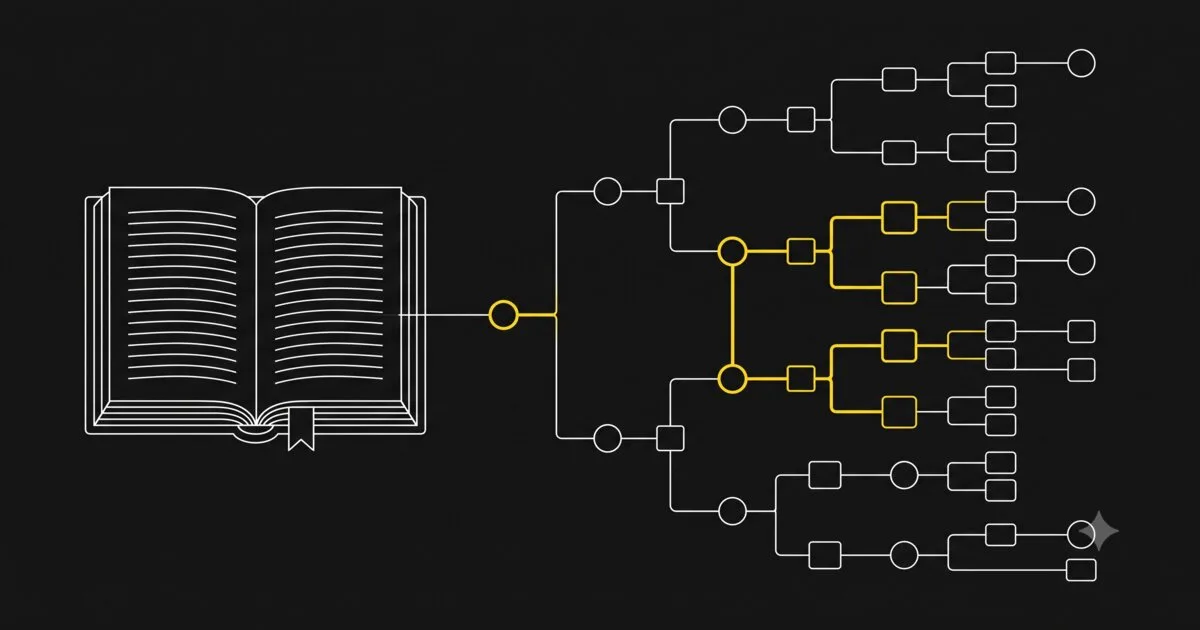
Frameworks that describe a concept, a mental model, a way of thinking about a problem, are valuable in a book but don't automatically translate into a tool. Frameworks that guide someone toward a specific decision, which path to take, which option fits, what to do next, translate far better. A tool needs an output. A decision-shaped framework already has one built in.
Look for variables that differ reader to reader
If the "right answer" from your framework is the same for every reader, you don't need a tool, a static page will do. The frameworks worth building into a tool are the ones where the answer actually depends on the reader's specific situation, their numbers, their constraints, their context.
Look for the chapter people highlight and reference most
If you've published before, or have early readers or beta feedback, you likely already know which chapter gets referenced back to you the most. That's usually a strong signal for which framework has enough standalone value to survive outside the book's narrative.
"A framework that describes a concept is valuable in a book. A framework that guides a decision is valuable as a tool."
You don't need to turn your whole book into a tool. You need to find the one framework in it that was always secretly a decision engine, and give it a place to run.