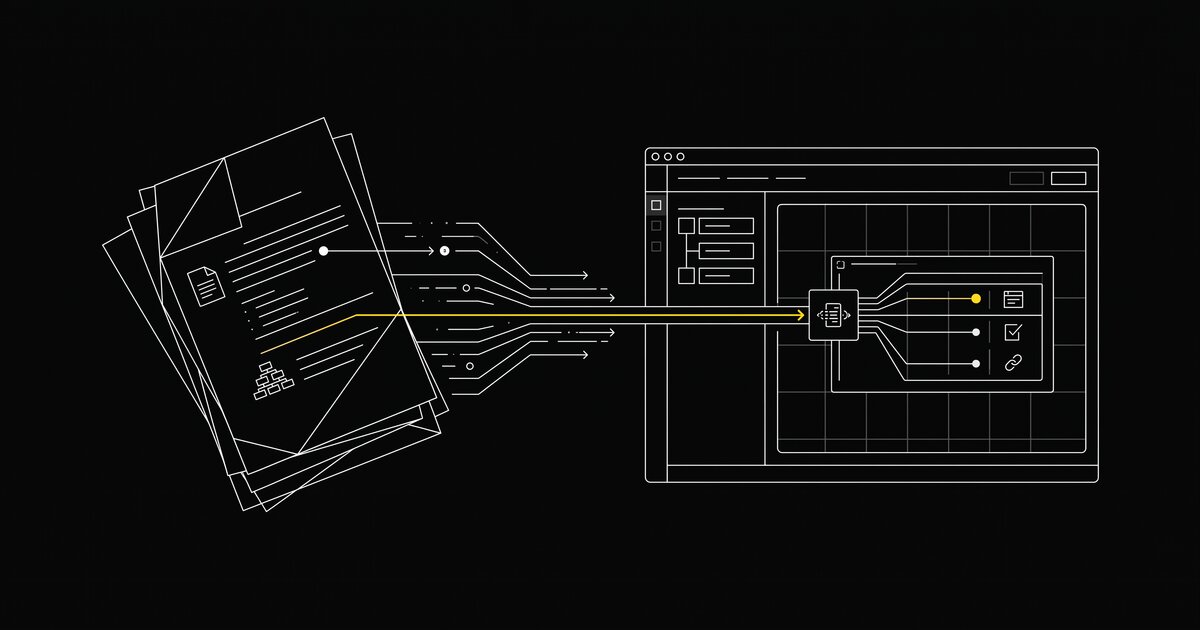
Every eLearning authoring vendor comparing tools this year starts from the same premise: you already have a course to build. Most authors, consultants, and researchers don't. They have a manuscript sitting in a word doc, or a framework scattered across old client decks, or a report that gets cited in policy briefs and read by almost nobody. That mismatch is the actual bottleneck between static content and something interactive, not which software costs less per seat.
The Course-Software Assumption
Atomi Systems' own comparison of the leading eLearning authoring tools rates ActivePresenter, Articulate Storyline 360, Adobe Captivate, iSpring Suite, and Elucidat on a single point: how well each one helps you build a course. iSpring converts PowerPoints into modules. Storyline and Captivate handle branching scenarios once you've learned their interfaces. Elucidat is built for large teams standardizing training at scale.
The comparison even frames advanced interactivity as a software capability problem and ranks it as achievable by "very few tools." That framing only holds if the starting point is already shaped to be a course, a slide deck, a module or curriculum.
Most people who want to make their work interactive don't start there. They start with a document.
What People Actually Have
Christian Pean, a physician who has published more than 90 peer-reviewed papers, ran into this issue this year. Health Affairs released new CMS healthcare spending data: $5.3 trillion, 18% of GDP, the highest two-year growth rate since 1991. The research was rigorous. The format it shipped in was a dense PDF of tables and paragraphs, the kind that gets cited in policy briefs and ignored by everyone else.
Pean didn't buy an authoring platform. He fed the research into Claude, built a scrollable, cinematic interactive site modeled on the kind of data journalism The New York Times produces, and had it live in about 20 minutes. He then built reusable prompts so the same process could run on the next static report.
The pattern predates this year's tools. Fitness coach Matt Fury took a public-domain, freely downloadable wrestling book and turned it into a course that still sells for $497 today, using general-purpose research tools rather than dedicated course software. The move underneath both, letting a general-purpose model do the conversion work instead of a specialized platform, is the same one.
The Bottleneck Was Never the Software
Authoring software solved a real constraint: turning static material into something interactive used to require specialized tools or a developer. iSpring, Storyline, and Captivate still do that job for teams that already have a course to assemble.
But the actual bottleneck for most individual authors and consultants was never which authoring tool to buy. It was the assumption that you needed one before you could start at all. A model that can read a document, follow its argument, and generate working, scrollable code removes that requirement for a large share of the people who own static content and want it to do more than sit there.
It doesn't ask what template you want. It asks what the document is trying to say, then builds around that.
The research wasn't the issue. The medium was.
If you're an author, consultant, or educator with a book, a framework, or a report sitting still, the decision in front of you isn't which course software to buy. It's whether you've been treating "interactive" as a category that requires specialized tools, when handing the document itself to a model built to read and rebuild it might be the more direct path. That's a narrower problem than the eLearning industry has been solving for, and it's the one most static content is actually stuck on.