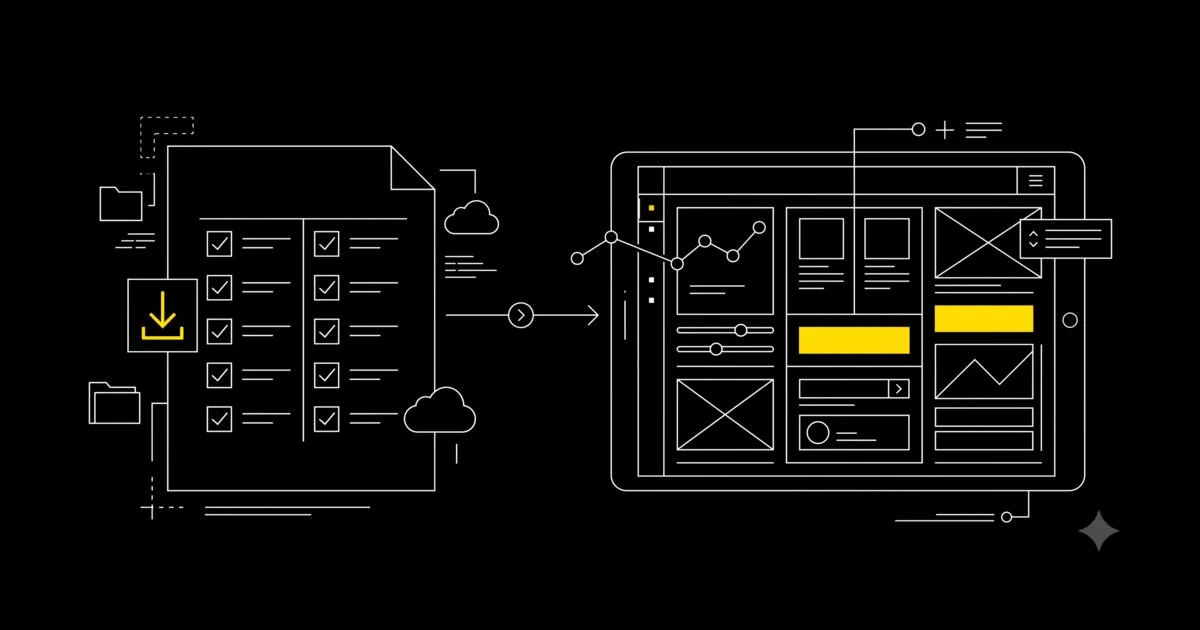
Most authors have a lead magnet: a checklist, a worksheet, a bonus chapter, offered in exchange for an email address. It works, in the narrow sense that people do enter their email. But look at what actually happens after that. Most lead magnets get downloaded, glanced at once, and buried in a folder nobody opens again.
A companion tool is a different kind of offer entirely, and it changes the relationship a reader has with your book long after they've finished it.
A lead magnet is consumed. A companion tool is used.
A PDF checklist is content in a slightly more official format. It gets read the way any document gets read, once, then filed away. A companion tool, something that takes a reader's specific situation and gives them a specific answer, doesn't get filed away the same way, because there's a reason to come back to it every time the book's core problem comes up again.
It keeps the book's framework alive
Books are full of frameworks, models, decision trees, that readers absorb once and then have to reconstruct from memory every time they want to apply them. A tool built around that same framework does the reconstructing for them. It's the difference between reading about a framework and actually having it on hand.
It's a stronger reason to keep in touch
An email list built on a one-time PDF download has weak reasons to stay engaged. An email list built around a tool people actually return to has a much stronger one, you become part of a habit, not just an inbox they forgot they signed up for.
"A PDF checklist gets filed away. A tool built around your book's framework gives readers a reason to open it again."
This doesn't mean lead magnets are worthless, they still work as a first step. But if your book has a real framework at its core, that framework deserves a home readers can return to, not just a PDF they downloaded once.