Adobe spent early September announcing that Acrobat can now do a lot more with your documents than open them. Acrobat processes more than 400 billion PDFs a year. A billion person audience is a fair estimation of who this update reaches. It's a real improvement for readers. It also solves a different problem than the one sitting on your desk if you have a book, a course, or a framework written down as static text.
A faster PDF still ends the way every PDF ends. Someone opens it, reads it and then closes it. The content has not changed, and neither has the reader's situation.
What Adobe Actually Shipped
The new Productivity Agent, announced September 9th, turns a document into summary slides, a personal podcast, and a searchable knowledge base with clickable citations. Adobe SVP Modi described the goal: Acrobat is already where people go to read their most important information. The agent helps them understand it faster and more comprehensively. Student Spaces, the version built for learners, has drawn more than a million monthly users since the beta launched in April.
None of that is a knock on the features. Faster comprehension of a document you were already going to read is a real win for the reader. It's just a different win than turning part of that document into something a reader works through and gets a specific answer from.
The Other Kind of Interactive
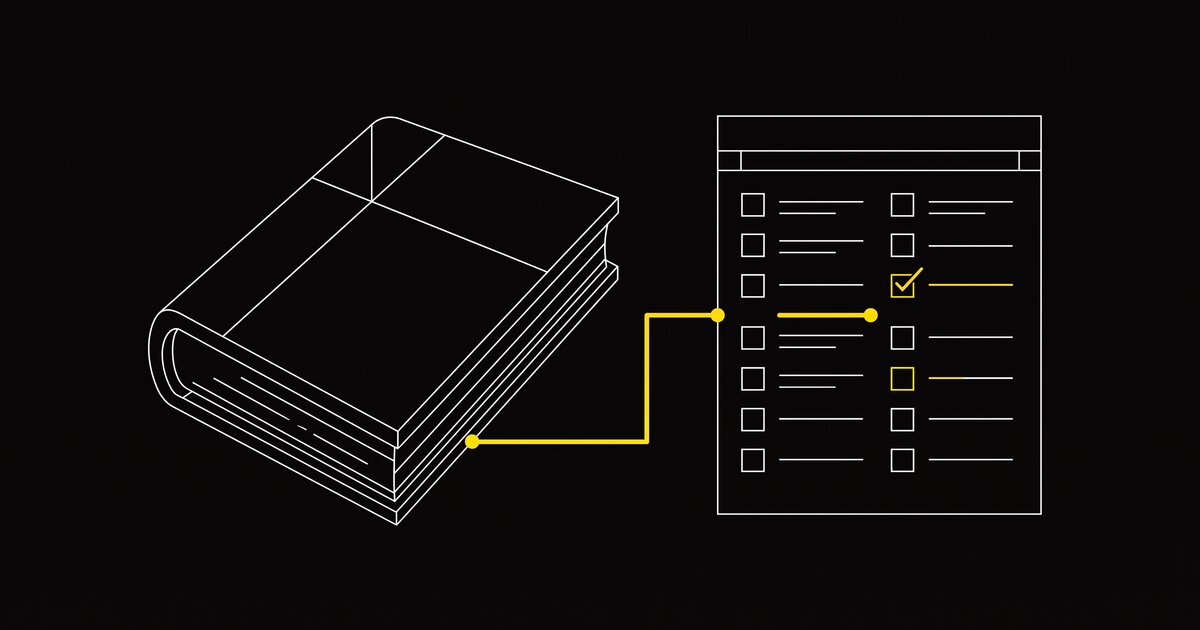
One author working from Chandler Bolt's Published did not try to convert his whole manuscript into anything. He picked a single piece buried in the methodology: a book launch readiness assessment. Then, in a live workshop, he rebuilt it as a standalone tool through six phases: 1) intake 2) framework mining 3) journey mapping 4) diagnostic construction 5) skill assembly 6) quality checking. What came out at the end was a an eight page client assessment a reader could use alone without commentary from the author.
One diagnostic slice that's extracted from the book and rebuilt as something a client can use by themselves does more for them than a faster read of the whole manuscript ever will.
What It Actually Costs
This part is worth saying clearly because most pitches will skip it. Extraction quality depends on a capable model. Capable models are not cheap at scale. In the same workshop, one participant on a twenty dollar a month plan burned through a full month of usage credits in under an hour. They were trying to follow along using Opus 4.6 for the extraction work.
This calls for a narrower scope not a bigger AI budget. Pick the one deliverable causing your clients the most friction right now, finish it completely, and leave the rest of the book alone until that piece is done.
Where to Start Looking
Every author with a book, every consultant with a framework, and every educator with a curriculum has at least one section that keeps doing the same job over and over in a conversation. It could be a diagnostic, a scoring rubric, a readiness check, or a sequencing decision. That is the part worth pulling out first.
The more useful move, for the one person actually paying you, is making one part of your work something they run themselves.
Adobe's billion person pitch is about reading things faster. Yours only has to work for the client in front of you right now. That bar gets a lot easier to clear once you stop trying to convert the whole book at once.