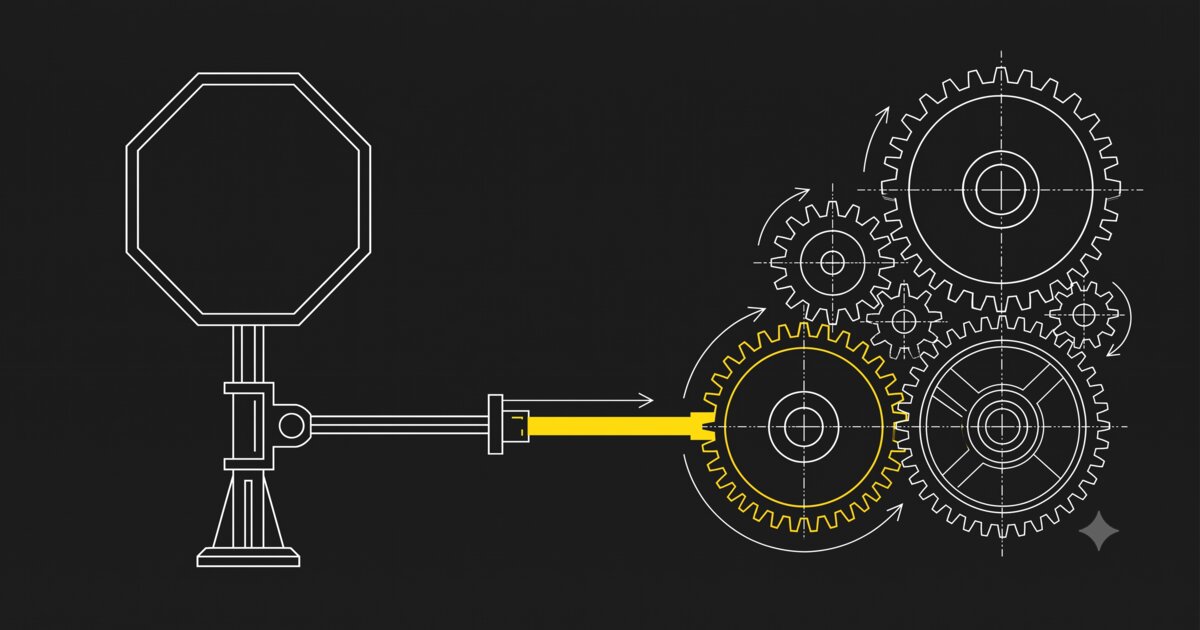
AI adoption is not a differentiator anymore. Content teams, course creators, and solo operators have come to the same conclusion this year: everyone already has the tools. What's left to compete on? Knowing where to stop.
These examples show what that refusal actually looks like.
Production is solved. Trust isn't.
Among UK and US content and creative professionals surveyed by Canto and Ascend2 last November and reported by EMARKETER, 75% said AI has increased how much content their organization produces and it was reported that only 4% aren't using it. However, consumers seem to be moving the other way: only 26% of US and UK consumers now say they prefer AI-generated content. This is down from 60% in 2023. Adoption is up. Preference is down.
The practitioners who still connect with an audience aren't the ones avoiding AI. They're the ones treating the AI output as a first draft, not a final draft. Umang Chauhan, who documents his own AI stack in detail, runs every prompt through a five-part structure before he asks for anything. He then rewrites what comes back. His thought, the tool doesn't matter if the prompt is garbage. He's watched people on free plans outperform people paying $200 a month. The difference was never the subscription, it was whether someone edited the output.
Generating isn't the hard part
The same pattern also shows up in people turning static content into something interactive. One newsletter writer laid out his exact process for turning a public-domain book into a course. He pulls a few books on the same topic, feeds them into NotebookLM (now Gemini Notebook), ask it to draft the course and the video series. It works, and it's fast. But by his own account, it's only step one.
His warning. AI hallucinates. Proofread everything. Rewrite what sounds off. Fact-check every claim before attaching your name to it and before asking someone to pay for it. A coaching-education organization studying the same problem from the institutional side arrived at a similar conclusion. A framework only helps someone if they can pick it up and use it today, without extra planning or expertise. Generating and publishing an unchecked draft doesn't clear that bar.
The line solo operators actually drew
The pattern shows up most among people running a business alone. One founder documented running her entire operation, a travel brand with a following over 220,000, on about $200 a month in AI tools. One tool for strategy and long-form writing, one for operations, and one for landing pages that used to cost $2,000 from a developer. She states that it replaces $8,000 to $10,000 a month in labor. She calls it the team she never hired.
Other solo operators, profiled separately by Business Insider, drew a narrower line. An email marketer writes every client message herself with no AI involvement. Her reason is that her personal, story-led voice produces a 33% conversion rate. She outsources only tech support and brainstorming. An accessory designer uses AI to edit product photos and saves roughly $2,000 per shoot This same designer posted 20%-plus year-over-year profit growth and insists every idea or recommendation she gives a client is her own. An accountant won't feed client financial data into AI under any circumstances, full stop. All four had access to the same tools. Each one decided, on their own, where to stop.
"The people whose work still stands out this year aren't the ones with the most AI in their process. They're the ones who can tell you, specifically, what they never let it touch."
These examples point to the same theme. Content teams that still connect with an audience treat the AI draft as unfinished. Creators turning static material into interactive tools treat the AI output as unverified. Solo operators who are growing treat certain tasks as off-limits, not because AI can't touch them, but because those tasks are the reason a client picked them over anyone else. None of it comes down to which tools you use. It comes down to what you've decided not to hand over.