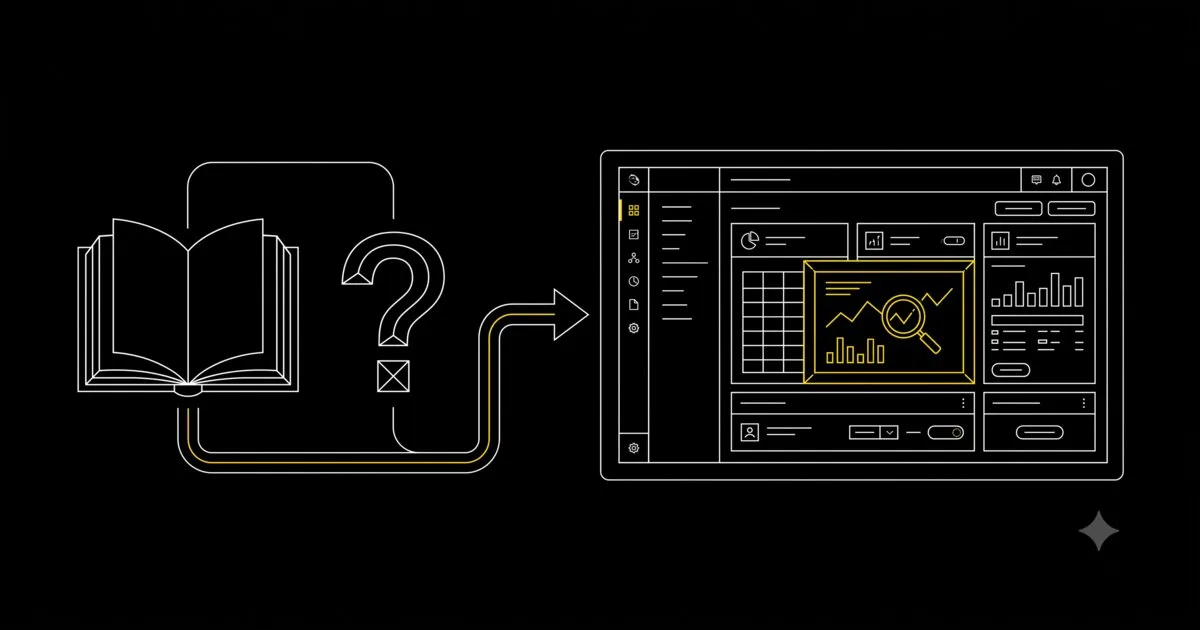
Companion tools work well for a lot of books. They don't work well for every book. Building one for the wrong kind of book means spending real time and money on something readers won't actually use, so it's worth checking first.
Here's a quick test to figure out whether your book is a good candidate.
Does your book solve a repeatable problem?
Books that walk through a single narrative arc, memoirs, most fiction, one-time transformation stories, don't usually need a tool, because there's no recurring problem for the tool to solve. Books built around a problem readers face again and again, planning, deciding, evaluating, tracking, are much better fits.
Do readers need to apply it to their own specifics?
If applying your book's advice looks the same for every single reader, a tool won't add much beyond what the book already says. If applying it depends heavily on each reader's own numbers, goals, or situation, a tool becomes genuinely useful, because it can adapt in a way the static page of a book can't.
Would you get asked "can you help me apply this to my situation"?
If you've ever gotten that question from a reader, in an email, at a talk, in a review, that's a strong signal. It means the book taught the concept well, but readers still needed help applying it to themselves. A tool is often the most scalable way to answer that question for everyone who has it, not just the ones who happen to reach out.
"If readers keep asking how to apply your book to their specific situation, that's usually your answer."
If your book passes this test, a companion tool is likely worth building. If it doesn't, that's fine too, not every book needs one, and forcing it rarely produces something readers actually use.