Automation is rarely the difficult decision. Deciding what not to automate is. Three sources published this year answer that question in different ways, and in my opinion the differences matter more than the tools.
Readers already discount the machine
The 2026 Reuters Institute Digital News Report found that 20% of people globally trust answers from AI chatbots, against 37% for news overall. In the UK, chatbot trust is 6%, the lowest of any market. Weekly use of chatbots for news rose from 7% to 10%.
Now, this data measures chatbot answers in news, not creator content written with AI. Connecting it to your own work is an inference, not proof. But the direction is useful. People use these tools and still discount what they say, and a reader who discounts the machine will discount you if they think the machine is you.
One operator drew the line
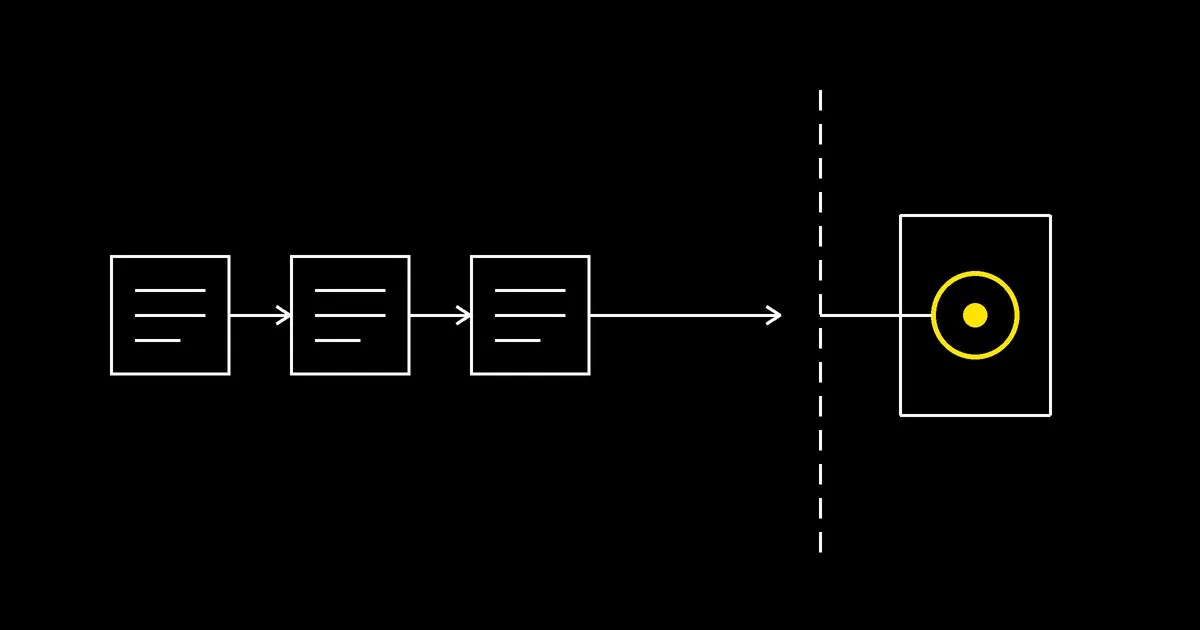
Lucija Tomšić publishes on Substack. Her system drafts 35 Notes a week for about $6 a month. It runs eight prompts in order, and she reads and edits every note before it goes out. Her rule is to automate the work you dread, not the work that is you. Her weekly article is never produced by the system. Only the distribution around it is.
The feedback loop is the part I find most interesting. One prompt reads the edits she makes by hand and turns her repeated corrections into a voice file. She caps the file on purpose, so only the strongest rules survive. Her corrections do the teaching, not a longer prompt.
She is also upfront about the limits. The system over-rates its own work. Thin articles produce generic notes. She treats the scores as a starting list. To put it plainly, a human sits in the middle of this workflow, and the boundary around what stays human is clear.
Another vendor removes the person
KITABOO's June release describes the opposite stance. Its AI reads a textbook PDF, finds the concept students struggle with most, and builds a simulation in about ten minutes. The output is one shareable URL with no login, and the headline promises no human involvement.
Keep in mind this is a sponsored vendor release, so the claims are the vendor's. It does not explain how the concept is chosen, how accuracy is checked, or whether anyone reviews the result before students see it.
Compare that with Mitch Harris, who is turning a 50,000-word course into Claude Skills that tutor him. His struggle was not comprehension. He finished the course and wrote that he still had trouble putting the knowledge into action. His post is from February 2026, which is older than six months, and it was the only dated practitioner account verified on this angle.
One tool assumes learners fail to understand. The other assumes they fail to act. The first can drop the person, but the second cannot.
Audit before you automate
A FreshBooks survey of 500 solopreneurs, run by Wakefield Research in June and July, found that 57% spend more than 10 hours a week on administrative work. Sixty-five percent said AI improves productivity, but they also said reviewing and checking its output creates a risk of burnout. Let's face it, review time is a cost. Every step you automate and then supervise still takes your hours.
So where do you start? Log a week of actual work by task and find the biggest block. Then ask whether that block is distribution, which a system can carry, or authorship, which it cannot. Keep the human where a reader would notice the absence. Most of what gets sold to solo operators skips this audit and starts with the tool.
Start with the line
If you build interactive tools from your books, courses, or frameworks, the same test applies. Automate the conversion and keep a person or a tutor with your context, especially where the learner has to act.