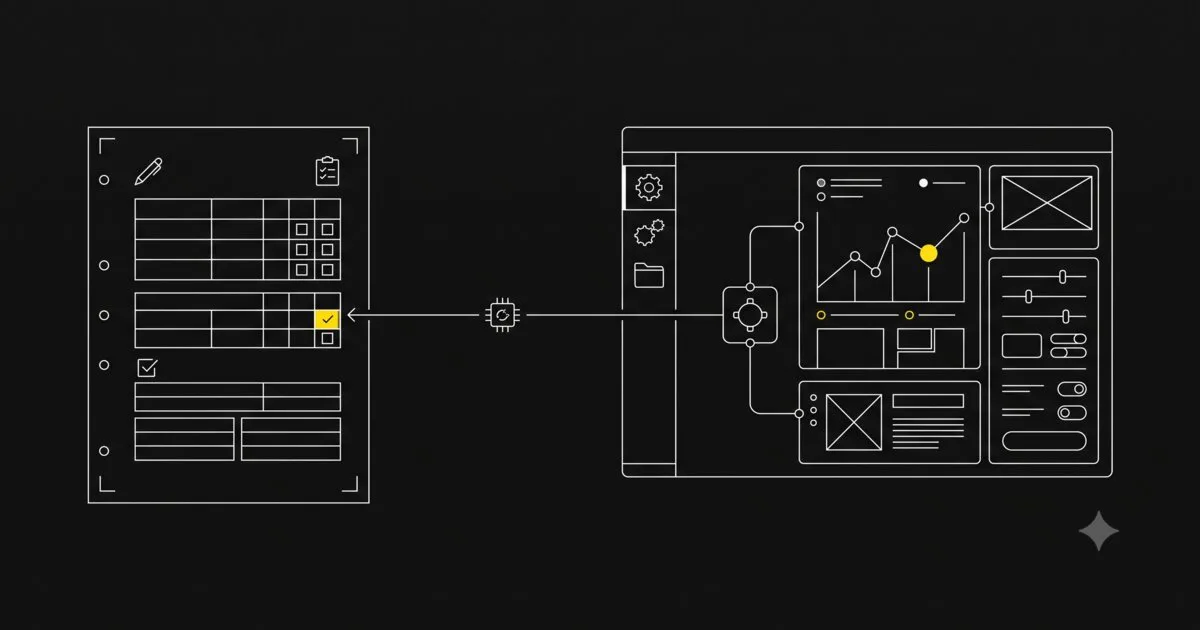
Course creators default to worksheets because they're familiar and easy to produce. A downloadable PDF, a fill-in-the-blank exercise, a printable planner. For some lessons that's genuinely the right format. For others, it's a missed opportunity to give students something far more useful.
Here's how to tell which one a given lesson actually calls for.
Static reflection favors a worksheet
If the exercise is about reflection, journaling, or organizing your own thoughts on paper, a worksheet does the job well. There's no calculation, no branching logic, no output that depends on combining multiple inputs. Adding interactivity here wouldn't improve anything.
Calculation and comparison favor a tool
If the exercise requires combining several inputs into a result, a budget, a score, a recommendation based on multiple factors, a worksheet forces the student to do that math by hand, which introduces friction and errors. A tool does the calculating for them and lets them explore "what if I changed this" instantly.
Repeated practice favors a tool
Worksheets are typically filled out once and set aside. If the skill being taught benefits from repeated practice with new variations each time, quizzes, drills, scenario practice, a tool can generate that variation on demand in a way a static printable simply can't.
"A worksheet forces students to do the math by hand. A tool does the calculating and lets them explore instantly."
Neither format is universally better. The mistake is defaulting to worksheets for every lesson out of habit, when some of them would serve students far better as something interactive.